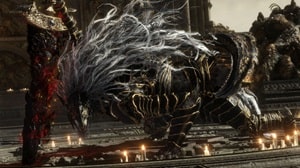
The open world of the Lands Between is vast, yet almost every region funnels toward a confrontation with something far larger and angrier than you. Knowing how these fights are organised turns an intimidating sprawl into a readable journey. For the narrative of how these figures came to war with one another, see our companion piece on the Shattering — this guide stays focused on the bosses themselves: where they are, whether you have to fight them, and what each encounter actually demands.
The Shardbearers: Holders of the Great Runes
The critical-path bosses are the shardbearers — the demigods and royals who each claimed a fragment of the shattered Elden Ring, known as a Great Rune. Restoring two of these runes is the formal requirement to enter Leyndell, the Royal Capital, and push toward the endgame, though you will likely defeat more along the way. Note that not every shardbearer is one of Queen Marika's own children; the line is broader than that, which is part of why their power levels are so uneven. The list below is organised by what the fight is like, not by lore.
- Godrick the Grafted — Stormveil Castle, Limgrave. A required Great Rune and the game's benchmark first demigod: a fair, readable fight that teaches you to punish openings rather than panic.
- Rennala, Queen of the Full Moon — Academy of Raya Lucaria, Liurnia. Head of the Carian royal line, she is not one of Marika's children but holds a Great Rune. Her encounter is more puzzle than wall, especially in its first phase.
- Starscourge Radahn — Caelid. A required festival boss and one of the great set pieces of the game; you can summon a roster of NPC heroes to fight at your side in the arena.
- Rykard, Lord of Blasphemy — Volcano Manor. An optional Great Rune holder, and an unusual fight won largely with a special weapon, the Serpent-Hunter, rather than raw stats.
- Morgott, the Omen King — Leyndell, the Royal Capital. The "Margit" who tested you at Stormveil returns here as a brutal, required guardian of the capital.
- Mohg, Lord of Blood — Mohgwyn Palace. Optional but holds a Great Rune, and his arena is the gateway to the Shadow of the Erdtree expansion.
- Malenia, Blade of Miquella — Elphael, Brace of the Haligtree. Entirely optional and widely considered the hardest fight in the base game; we have a dedicated strategy guide for her.
The Erdtree Guardians
Past the demigods stand the bosses who guard the Erdtree and the throne itself. Maliketh, the Black Blade, is Marika's shadowbound beast and the keeper of Destined Death — his second phase is a blistering test of timing that many players treat as the true skill check of the campaign. Beyond him wait Godfrey, the first Elden Lord, and the Elden Beast, the divine vessel of the Greater Will that forms the final encounter. These fights reward everything the Lands Between has spent dozens of hours teaching you.
Optional Terrors Worth Seeking Out
Some of the most memorable bosses are entirely skippable. The Fire Giant guards the path to the Forge of the Giants. Astel, Naturalborn of the Void, lurks at the end of Ranni's questline in the eternal cities beneath the earth. Dragonlord Placidusax sleeps outside of time in Crumbling Farum Azula. None are required to finish the game, yet each deepens the world and tests a different facet of your build — and several gate questlines or unique rewards you would otherwise never see.
Reading the Difficulty Curve
The single most useful thing to internalise is that the boss difficulty is deliberately uneven. You are meant to wander into fights you are not ready for, get humbled, leave, grow stronger, and return. If a boss feels impossible, that is often the game nudging you to explore elsewhere first. Treat every wall as information rather than failure, and the roster of the Lands Between stops being a gauntlet and starts being a map of where to go next.